

Every generation has its rebels. And every generation, those rebels can walk into a store and buy their rebellion off the rack.
That’s the strange truth about counterculture: the outcasts are still a target market demographic. If you’ve ever felt like your way of standing apart came prepackaged, you’re not imagining it. So what does it actually mean to rebel when rebellion itself is for sale?
Rebellion, now in stores
In his 1997 book The Conquest of Cool, historian Thomas Frank showed that advertisers embraced 1960s counterculture style almost immediately. Madison Avenue didn’t fight the rebels. It hired their look. Frank called it hip consumerism: rebellion turned into a product category.
Once you see it, you see it everywhere. The 1950s sold the chipper, perfect housewife. Gen X pushed back with a counterculture that was essential and real, and it still came with a uniform: slouch, wear dirty clothes, be sad and mad all the time. In the early 2000s, my generation’s rebellion was thrifting, upcycling, slow fashion, and homesteading, and the market answered with greenwashed everything. Then came the Xanax SoundCloud era.
Each one started as a genuine impulse. Each one ended up on a shelf.
Why the system loves rebels
In their 2004 book Nation of Rebels (published in Canada as The Rebel Sell), Joseph Heath and Andrew Potter argued that counterculture doesn’t threaten consumerism. It fuels it. Being different means constantly buying new ways to be different, and the moment a style goes mainstream, the rebels need a new one.
The idea goes back further. In 1964’s One-Dimensional Man, Herbert Marcuse argued that consumer society absorbs its own opposition by giving people satisfying things to want. In 2009, Mark Fisher’s Capitalist Realism popularized the line that it’s easier to imagine the end of the world than the end of capitalism. Even anti-capitalist art gets sold as merch.
Someone in my chat added another layer: we’re haters partly to identify ourselves to each other. Hating is a kind of counterculture, a way to signal who your people are. That’s real community building, and it’s also exactly the kind of identity that’s easy to market to.
From the record store to infinite microcultures
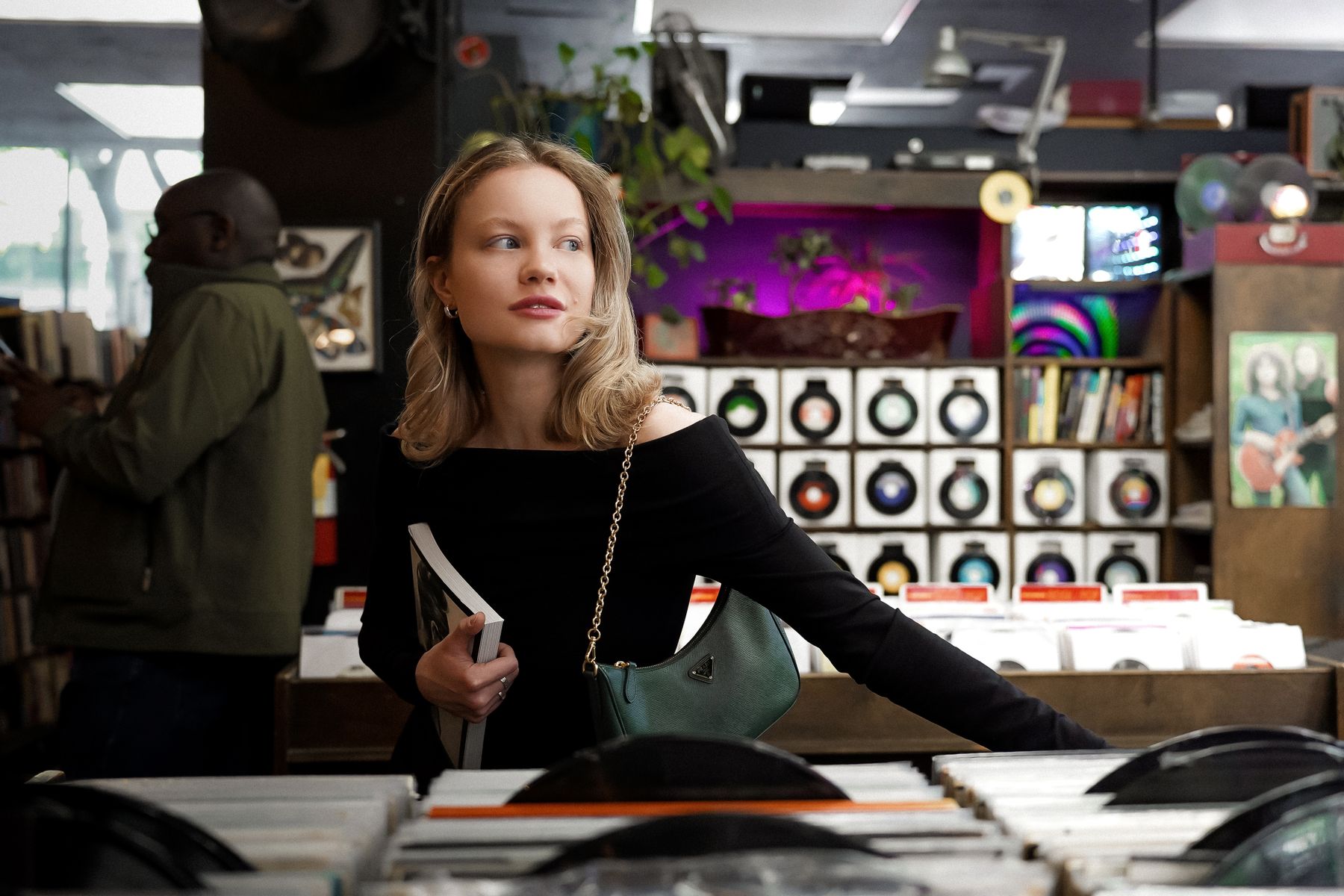
My dad has a great way of describing what culture was like when he was young. There were only as many albums as the record store carried. Most people didn’t hear any music that wasn’t on the radio or in that store. TV had maybe ten channels, and the news had three stations at most.
So to be a radical back then, you had to go looking for content that was very hard to find. You had to stretch your thinking far beyond what pretty much everyone around you believed. Or you could buy into the one counterculture on offer, which was its own prepackaged ideology.
Now we have the opposite problem. Microcultures are everywhere, and the old shared culture is dissolving. As someone who’s anti-hegemony, I find that exciting. But I also worry that some people feel disoriented, like they don’t have a place in the world or can’t find anyone who thinks like them. And every one of those microcultures still comes with something to buy.
The real counterculture
In the early 2000s, I was all in: slow fashion, eco-friendly everything. Now I use Amazon, I wear fast fashion, I use AI constantly. I know the damage. I know about the data centers and the small businesses that are gone. But I tried living by a counterculture ideology that was sold to me, and it made me smaller.
We’re on a train that’s out of control, in the middle of a huge global transition. The best thing you can do is align your actions and your morals with what you think is right. Not right according to some counterculture ideology that’s been packaged and sold to you, but right according to what truly fulfills you, what makes you happy, and what feels authentically right to your spirit.
That’s a radical thing to say. But in a world where even rebellion comes with a price tag, I’d argue it’s the only counterculture left. The market can sell you a look. It can’t sell you your own sense of what’s true.
Sources
- Thomas Frank (1997), The Conquest of Cool: Business Culture, Counterculture, and the Rise of Hip Consumerism
- Joseph Heath & Andrew Potter (2004), Nation of Rebels: Why Counterculture Became Consumer Culture
- Herbert Marcuse (1964), One-Dimensional Man
- Mark Fisher (2009), Capitalist Realism: Is There No Alternative?
- M. Kent Jennings (1987), Residues of a Movement: The Aging of the American Protest Generation, American Political Science Review
- Doug McAdam (1988), Freedom Summer
- Ronald Inglehart (1977), The Silent Revolution
Thank you for raising the vibration of earth. If this speaks to you, join UNICULT.
