

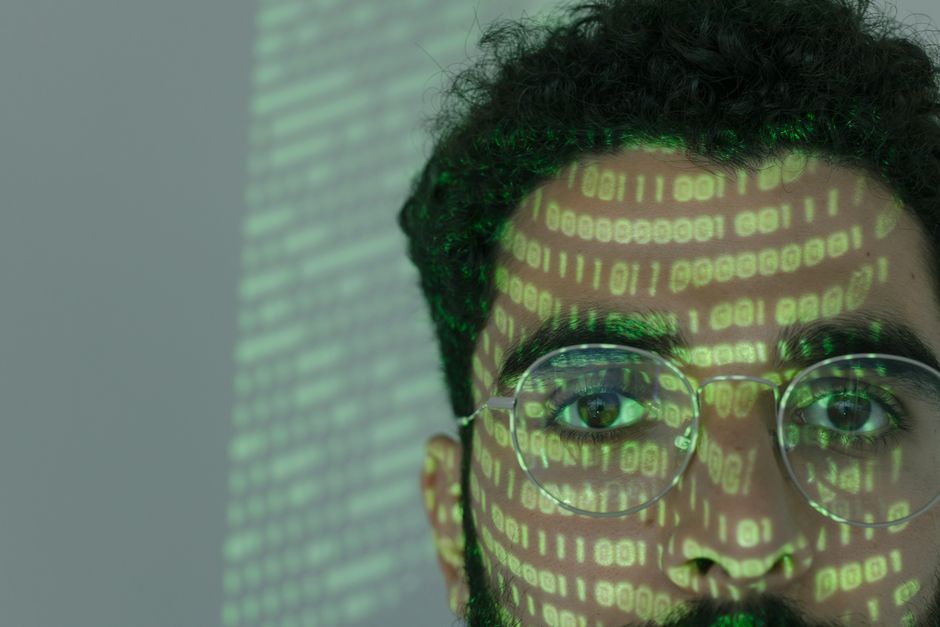
I'll be honest: I fall for AI too. I'll share a video, then look again and think, wait, that's AI. It was too good to be true.
That moment is happening to all of us now, constantly. And the research says it isn't random. We may actually be primed to trust machines, and machine-made faces, more than we trust each other. If that's true, the question isn't just whether we can spot a fake. It's what happens to our own ability to judge what's real.
The faces we trust
In 2022, Sophie Nightingale and Hany Farid published a study in PNAS that should have been bigger news. They asked people to sort 800 faces into real and fake, and to rate how trustworthy each one looked. People couldn't reliably tell the difference. And across three experiments, the AI-made faces were rated 7.7% more trustworthy than real ones. The three most trustworthy faces in the study were all fake, and the four least trustworthy were all real.
The researchers' best guess at why: AI faces tend to look more like average faces, and average faces read as trustworthy. The machine didn't learn to make a person. It learned to make the face we're wired to believe.
A year later, a team led by Elizabeth Miller at the Australian National University went further in Psychological Science. They found that White AI faces were judged as human more often than actual human faces. They called it AI hyperrealism. Because the algorithms were trained mostly on White faces, the effect showed up for White faces and not others, which means our sense of what looks "real" is now being shaped by a biased dataset.
The detail that stopped me cold: the people who got it wrong most often were the most confident they were right.
When the signal can be faked
Appearance has always been part of how we decide who to trust. How someone dresses, how they keep their hair, how much attention they put into showing up: it's part of a social contract. You can get a read on a person from it.
I learned this the hard way. I tend to see people's souls, and I've trusted people because of the spiritual power I sensed in them, even when their lives in 3D were falling apart. What finally kept me safe was adding grounded, material standards on top of my intuition. Not instead of it. On top of it.
But those outer signals only work when they cost something. When a filter can give anyone flawless skin and an AI can generate a perfectly average, perfectly trustworthy face in seconds, the signal stops meaning anything. And our brains haven't caught up. We're still running old trust shortcuts in a world where the shortcuts can be manufactured.
We're primed to believe the machine
It isn't only faces. Researchers have studied automation bias for decades: our tendency to go along with what an automated system tells us, even when our own judgment or other evidence says otherwise. It's shown up everywhere from cockpits to hospitals.
In 2019, Jennifer Logg, Julia Minson, and Don Moore tested it directly. Across six experiments, everyday people took advice more readily when they believed it came from an algorithm than from a person. That held for estimates, for predicting which songs would be popular, and even for predicting romantic attraction. Here's the twist: the researchers they surveyed expected the opposite. Experienced professionals leaned on the algorithm less, and it actually hurt their accuracy. So trusting the machine isn't always wrong. The problem is trusting it by reflex.
Because machines carry bias too. In their 2018 Gender Shades study, Joy Buolamwini and Timnit Gebru tested three commercial gender-classification systems. The error rate for lighter-skinned men topped out at 0.8%. For darker-skinned women, it reached 34.7%. The datasets the systems were judged against were overwhelmingly lighter-skinned.
That's the same root as AI hyperrealism. The machine reflects whoever it was trained on. When we trust it more than people, we inherit its blind spots, and we feel confident doing it.
When we let the machine think for us
There's a name for handing our mental work to a tool: cognitive offloading. We've always done it. We write lists, we save phone numbers, we use calculators. In 2011, researchers even found that when people expect to be able to look something up later, they remember where to find it rather than the information itself. Psychologists started calling it the Google effect.
Generative AI takes offloading further, because it doesn't just store information. It hands us the conclusion. In a January 2025 study of 666 people in the UK, Michael Gerlich found that heavier AI use went with weaker critical thinking, and cognitive offloading largely explained the link. The youngest participants, ages 17 to 25, leaned on AI the most and scored lowest. Gerlich is clear that this is a correlation, not proof of cause, but the pattern is hard to ignore.
A 2025 study from Microsoft Research and Carnegie Mellon surveyed 319 knowledge workers who use AI every week. The more confident people were in the AI, the less critical thinking they did. The more confident they were in themselves, the more they questioned what it gave them. Many said it was hardest to check the AI's work in areas where they didn't already have expertise.
Put that next to the face research and a loop appears. We trust the machine, so we check it less. We check it less, so we get worse at checking. And the less practiced we are, the more confident we feel when we're wrong.
Discernment is a muscle
All of this points to one thing: discernment. It's the faculty that lets us tell true from false, safe from unsafe, a real person from a convincing image of one. And like any muscle, it weakens when we stop using it.
Hyper-realistic faces exploit the shortcuts discernment used to rely on. Automation bias tempts us to skip it. Cognitive offloading lets it waste away. None of these require bad intentions from anyone. They just require convenience.
The answer isn't to stop using AI. I use it every day, and I love living in the future. The answer is to keep exercising discernment on purpose. Ask where an image came from. Check the machine's answer against what you know, especially when it confirms what you already wanted to believe. Do some thinking yourself before you ask. Notice when something feels too good to be true, and treat that feeling as information.
And don't throw out your intuition. My own lesson was that intuition alone wasn't enough, and outer signals alone weren't enough. Discernment is both: what you sense, checked against what you can see and verify.
So, are you primed to trust AI more than humans? Probably. Most of us are. The question is whether you'll keep the muscle strong enough to notice.
Sources
- Nightingale & Farid (2022), AI-synthesized faces are indistinguishable from real faces and more trustworthy, PNAS
- Miller et al. (2023), AI Hyperrealism: Why AI Faces Are Perceived as More Real Than Human Ones, Psychological Science
- Logg, Minson & Moore (2019), Algorithm appreciation: People prefer algorithmic to human judgment, Organizational Behavior and Human Decision Processes
- Buolamwini & Gebru (2018), Gender Shades, Proceedings of Machine Learning Research
- Gerlich (2025), AI Tools in Society: Impacts on Cognitive Offloading and the Future of Critical Thinking, Societies
- Lee et al. (2025), The Impact of Generative AI on Critical Thinking, CHI '25
Catch UNICULT Unicron live on Twitch and YouTube.
