

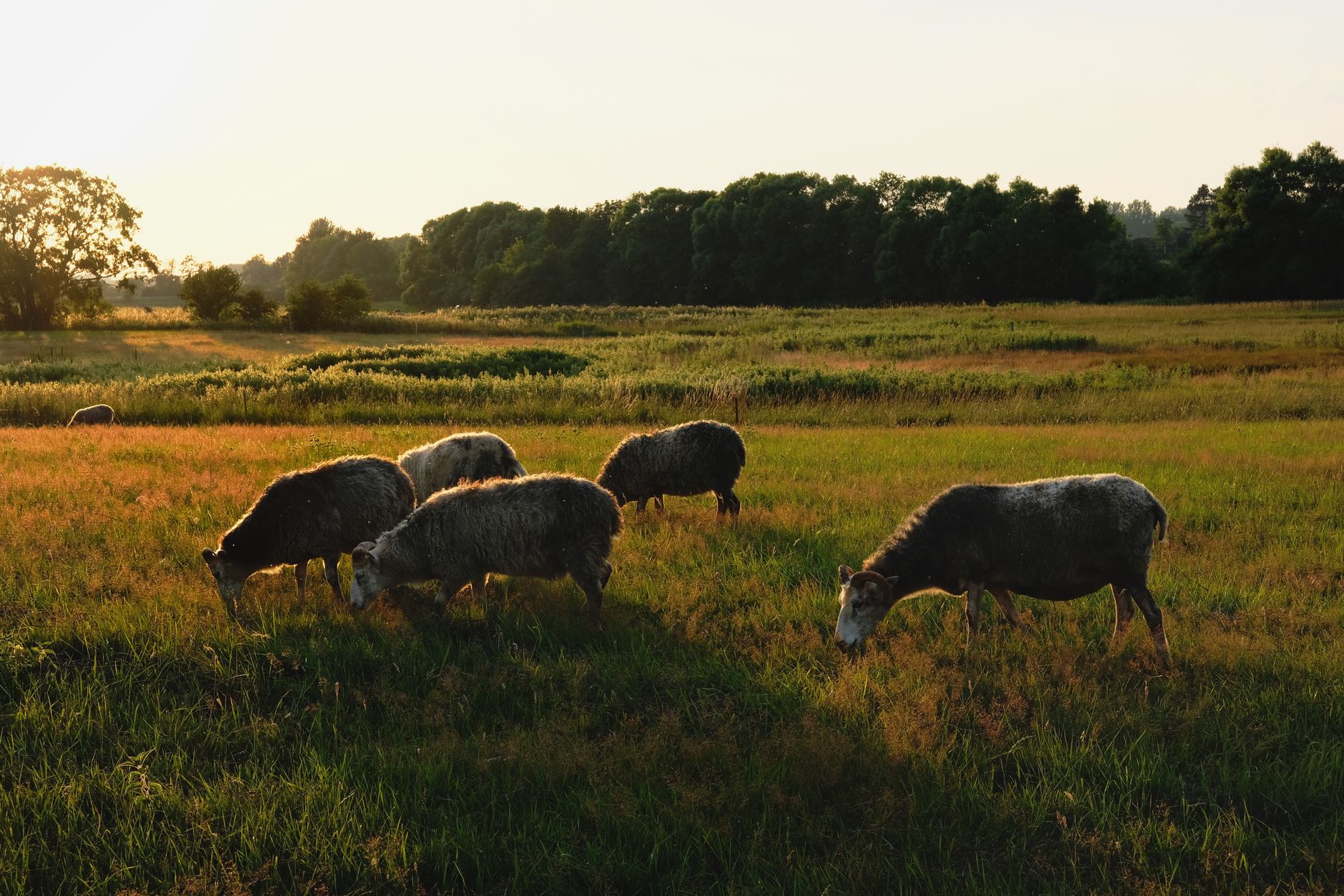
Every family seems to have one: the kid who doesn’t fit. The one who asks the uncomfortable question at dinner, who feels everything too much, who won’t play along. Families call that kid the black sheep. I’ve always called them the rainbow sheep.
Recently I was interviewing Hester Van Hooven Ward, a shamanic healer, for my podcast, Unicole Unicron & Friends. She brought the idea back to me with a depth I haven’t stopped thinking about. The traditional black sheep, she said, are just saying the truth. They’re bringing up everything no one else will talk about. They’re following their heart instead of going along with what they’re told. And that’s not black. That’s rainbow. It’s too bright for the darkness to take in and feel safe seeing, “so they attack.”
That’s the whole story of the outcast child in one sentence.
Who gets cast as the rainbow sheep
No kid thinks, I’m going to grow up to be an outcast. Every child wants to fit in and be accepted by their family. But some kids are born seeing what everyone else has agreed not to see. They notice the tension nobody names. They ask why. They feel the feelings the adults are avoiding. They’re sensitive, or different, or queer, or neurodivergent, or simply honest in a family that runs on pretending.
And a family that’s built on unspoken rules needs somewhere to put everything it won’t face. Very often, it puts it on that kid. The rainbow sheep becomes the problem, so nobody has to look at the actual problem.
Some level of rejection, from family or from society, has to happen before a child decides: okay, fine, I’m on my own then. And once that decision is made, it shapes everything that comes after.
The narcissistic family script
This pattern gets especially intense in narcissistic family systems. In those families, everything revolves around protecting the image, usually the image of one parent, and every child gets handed a role.
There’s the golden child, who reflects well on the parent and can do no wrong. There’s the lost child, who disappears to stay safe. And there’s the scapegoat, who gets blamed for the family’s dysfunction and carries its shame. The scapegoat is almost always the rainbow sheep: the one who sees through the performance and won’t play along with it.
When the truth-teller speaks, the family can’t afford to hear it, because hearing it would crack the image. So the message gets flipped. You’re too sensitive. You’re dramatic. You’re the difficult one. You’re the reason this family can’t get along. Over time, the scapegoat can start to believe it.
Many rainbow sheep adapt by becoming hyper-independent. They stop asking for help because asking never worked. And the family uses that against them too: oh, they don’t need us. They can do everything on their own. Underneath, the kid never stopped needing belonging. They just learned to front like they didn’t, because caring openly hurt too much. The tribe says, we don’t care about your needs. The kid says, fine, I don’t care that you don’t care.
And here’s the cruelest twist: when the rainbow sheep finally sets boundaries or walks away, the family often tells the story that they abandoned everyone, which proves the family was right about them all along.
So many of us were the rainbow sheep
If you’re reading this, there’s a good chance you were the rainbow sheep somewhere: in your family, at your school, in your town, or in the religion you grew up in.
A lot of people in UNICULT left other religious groups. They were raised to follow a rigid set of rules, and when they started deprogramming, they found the beauty of nuance and the pain of being cut off from everyone they knew. Others grew up as the scapegoat in their own homes. Whole subcultures are built by people who were told, in one way or another, that they were the problem.
You were never too dark
Healing starts when you see the script for what it is. The role you were given was never the truth about you. It was the family’s way of avoiding its own pain. The hyper-independence was protection. The need to belong was never wrong. It was just never met.
So meet it now. Let people help you, even a little. Notice when you’re fronting like you don’t care. Find the people who can actually see your colors. And learn the difference between rejection and boundaries: when someone needs space, or is too tired to play with you right now, it doesn’t mean you’ve been cast out. Boundaries are healthy, including the ones you set with a family that keeps handing you the same old role.
And remember what Hester said. You weren’t the darkness in your family. You were the light it couldn’t handle. The rainbow sheep isn’t outside the flock. It’s the part of the flock that shows everyone else what color is possible.
You belong here. You always did.
Thank you for raising the vibration of earth. If this speaks to you, join UNICULT.
